Need a hand?

Drought, bushfires, Covid-19, festivals cancelled, recession! GQ Tax is here to help.

My flexible pricing means relief for you during a downturn (no fixed fees, no automatic annual increases).

Specialised cash flow coaching is available to all business clients to help you get the most out of your business whatever the conditions.

Call Grant today on 0481 02 44 66

30% Discount Bushfire & Covid-19 Frontline Heroes

Thanks to our bushfire and Covid-19 heroes! Discount is available to employees and businesses in; health care, aged care, emergency services, RFS volunteers, ADF personnel including reserves, hygiene services, food supply and essential retail.

Terms and Conditions

Offer available to all employees in the listed industries (eg. admin staff working in a hospital would be eligible).

Only one 30% discount available per individual/entity (eg. a nurse who is also an RFS volunteer is not eligible for a double discount).

Cannot be used in combination with any other offer GQ Tax may make.

If your industry/occupation is not mentioned in this offer, I am open to discussion, please call me.

Offer ends 31st October 2020.

Drought and JobKeeper

I’m hearing a lot of people (including other accountants!) say that JobKeeper isn’t available for some businesses in our region because their turnover was already low 12 months ago because of the drought.

Using the basic test, this may be right, your businesses turnover might not be 30% lower than last year because it was already low in 2019.

There is however an alternative test for businesses affected by drought and other natural disasters:

(1)          An entity applies the alternative test under this section if:

(a)          the entity conducted business or some of the business in a declared drought zone, or declared natural disaster zone, during the relevant comparison period, and

(b)          the drought or natural disaster changed the entity’s turnover.

(2)          The alternative test is the entity uses the entity’s current GST turnover for the same period in the year immediately before the declaration for the purposes of the basic test in section 8 of the Rules.

https://www.legislation.gov.au/Details/F2020L00461

So if in 2019 your business already had reduced turnover due to the drought and in 2020 your business is affected by Covid-19, you compare the figures from an earlier year. Tamworth was drought declared in April 2018, so a business in Tamworth would use comparative figures from 2017! Glen Innes was not officially in drought until June 2018, so a business applying for JobKeeper based on April or May 2020 would use comparative turnover from 2018. However a Glen Innes business using June 2020 figures would use the comparatives from June 2017.

So in short, just because you were in drought in 2019, you may still be eligible to apply for JobKeeper.

Working From Home Expenses Shortcut

The ATO have announced a new “shortcut” method for claiming your working from home expenses as a result of the Covid-19 pandemic.

For the period 1 March 2020 to 30 June 2020, if you were working from home as a result of the Covid-19 pandemic, you can now claim a flat rate of 80 cents/hour on your 2020 tax return. This will cover the following:

  • Additional electricity usage.
  • Decline in value of home office furniture.
  • Cleaning
  • Phone
  • Internet
  • Computer consumables (i.e. ink cartridges)
  • Stationery
  • Decline in value of computer, laptop or similar.

The bundling in of phone, internet, computer consumables, stationery and decline in value of computers is new. There is no requirement to be working from a dedicated home office or study. You must keep a record of the hours worked (e.g. timesheets or a diary).

You are still able to use the normal home office expense rules if you prefer.

Working from home?

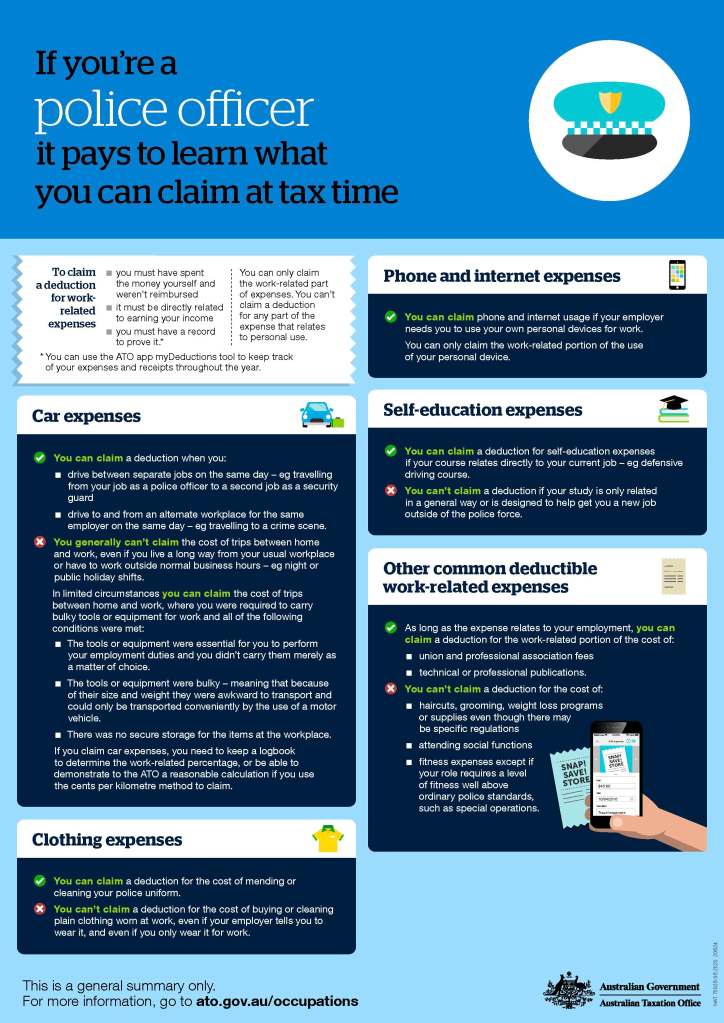
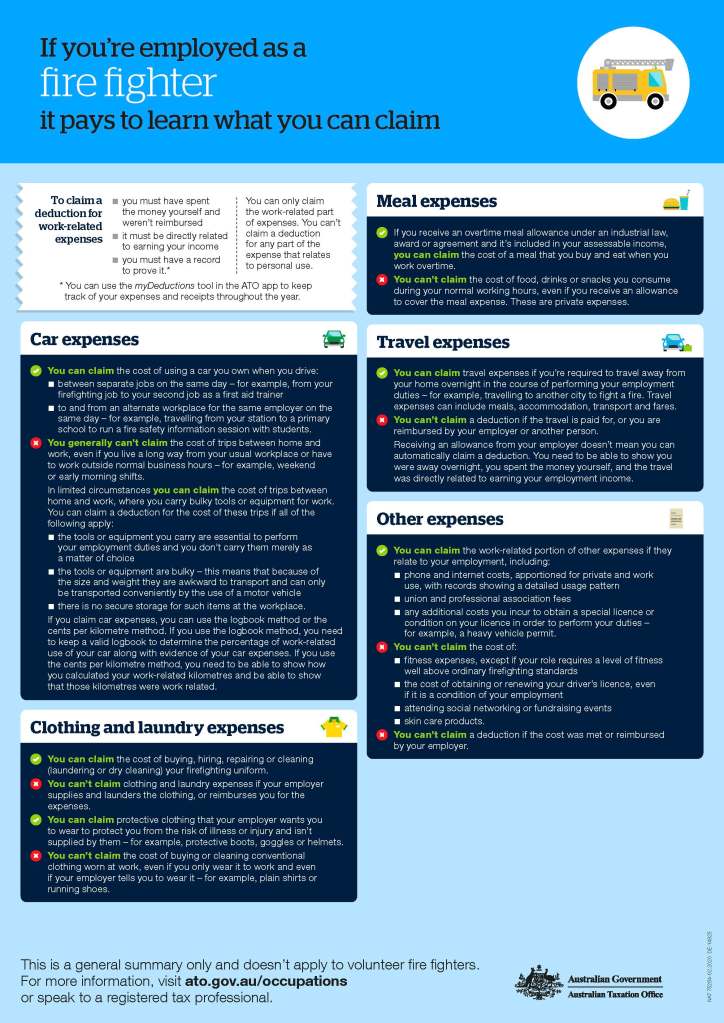
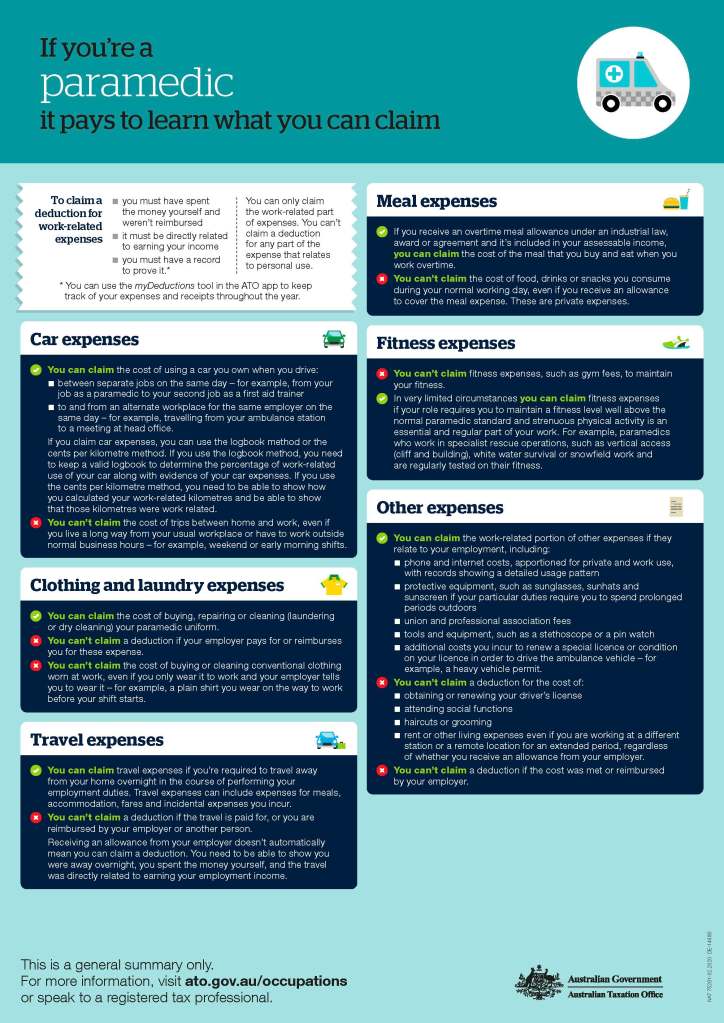
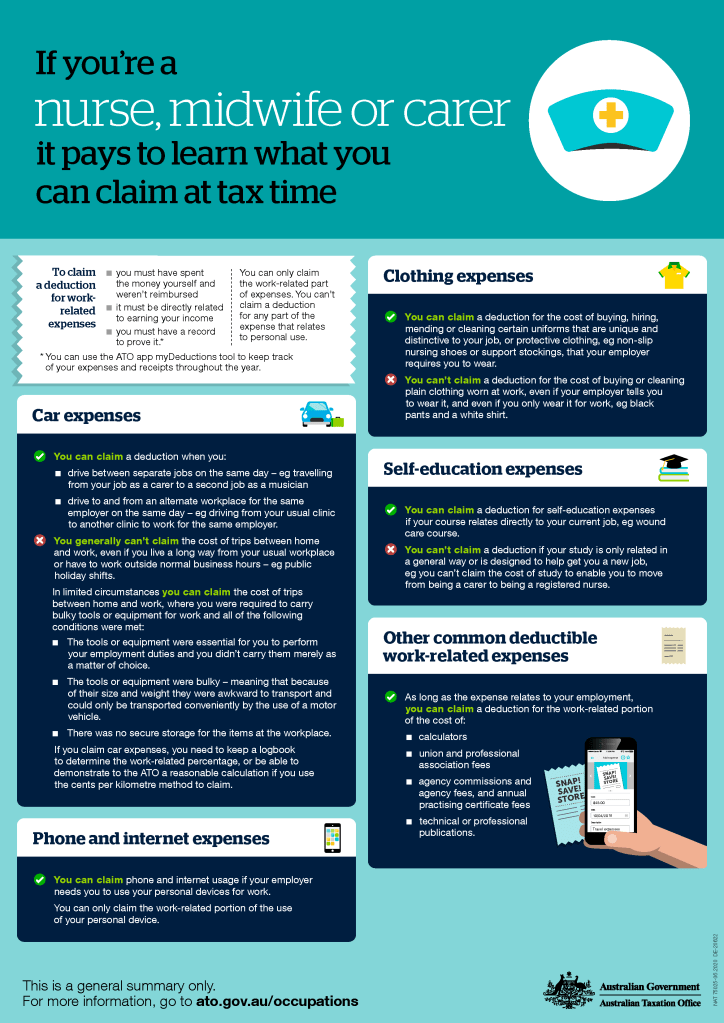
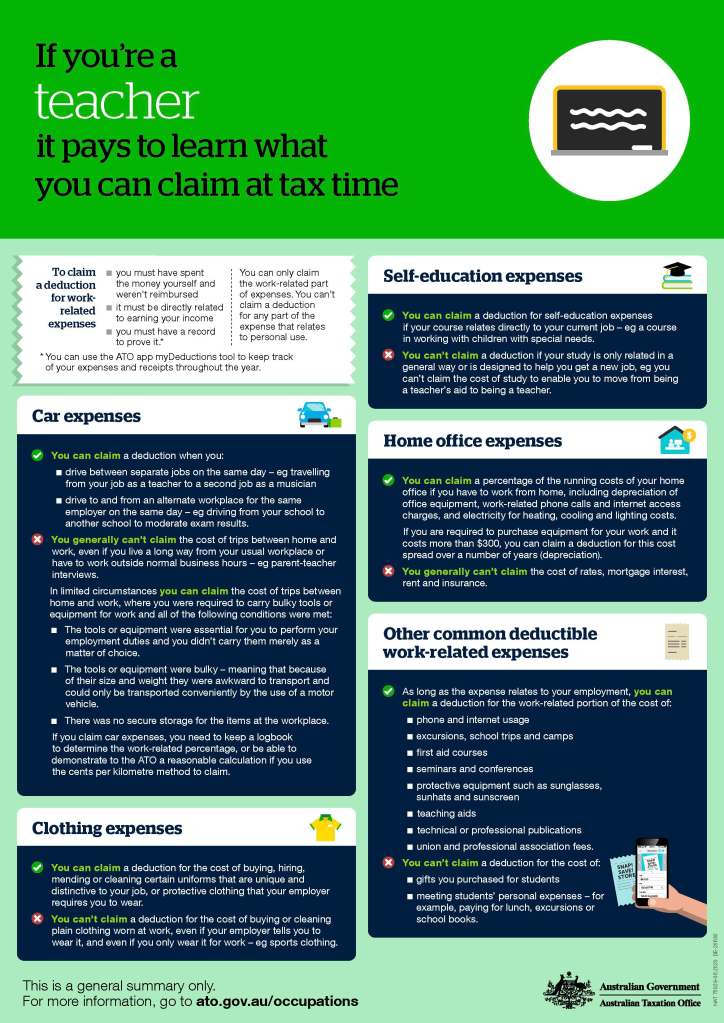
Working from home or using your car to deliver products to homes? You may be entitled to tax deductions that you haven’t been previously. Now is the time to start keeping your records!

Home Office Expenses

If you’re working from homey may be able to claim for running expenses (detailed below) and/or use of your phone and internet. Generally you will NOT be able to claim for occupancy expenses such as council rates, land taxes, home insurance, mortgage interest or rent.

Running Expenses

Running expenses are things like electricity usage, cleaning, decline in value of equipment and furniture, repairs to equipment and furniture and stationery. Keep your receipts for items you buy (I recommend using the ATO app to photograph them). Items under $300 can be claimed fully in the year of purchase.

There is a simple way and a difficult way to claim your electricity, cleaning and and furniture items over $300. The simple way is to keep a record (e.g. in your diary, notebook or a spreadsheet) of the number of hours per day you spend working in your home office. At the end of the year you add those hours and then claim 52 cents per hour. Keep your record of hours as evidence for your claim. The difficult method involves calculating the actual expenses for these items and involves calculating the proportion of your bills based on the floor area of your workspace. This method gets particularly complicated if you don’t have a dedicated room as your office or you are sharing this space with other family members.

Computer and other equipment that is not furniture over $300 will need to be depreciated (you claim some of the cost over a number of years) whichever of the above methods you use.

Phone & Internet

If your claim for phone usage is small (up to $50) you can claim on a per call basis, keeping a record in your diary of your usage:

  • 25 cents per call from a landline
  • 75 cents per call from a mobile
  • 10 cents per tex message.

To claim more than $50 on your phone usage or to claim any internet expense you will need an itemised bill or a complete record of your usage that covers a period of four weeks. Many people of course no longer receive itemised bills, but you should be able to access your account via your provider’s website. You can calculate your claim in the following ways:

  • Calculate the number of work calls as a percentage of total calls
  • Calculate the time spent on work calls as a percentage of total calls
  • Calculate the amount of data downloaded as a percentage of total downloads (in the age of video streaming services this percentage may be quite low).

Once you have calculated these percentages over a 4 week period, you can apply that same percentage for the period you are working from home.

Car Expenses

If you use your own car for work purposes, you can claim a deduction using the cents per kilometre method or logbook method. If you use someone else’s car for work purposes, you can only claim for direct costs you pay for – such as fuel. 

Cents per kilometre

You can claim up to a maximum of 5,000 km per vehicle at a rate of 68 c/km. You need to keep a record of your km travelled, either via a diary or I recommend the ATO app. You can’t use the c/km method if your vehicle is a motorcycle or has a carrying capacity more than 1 tonne or nine people.

Logbook

This method is more complicated that the c/km method but is useful if you travel more than 5,000 km. Again I recommend using the ATO’s own app to help your logbook recording. For a period of 12 continuous weeks you need to record all work related travel as a percentage of all travel. This percentage is then used to apportion all vehicle costs over the period you are using your vehicle for work. You will need to keep records and apportion all running costs of your vehicle such as:

  • Fuel and oil
  • Services & tyres
  • Rego
  • Insurance
  • Interest on car loan (but not the principal)

You can’t claim for the purchase price of a car, including additions such as window tinting or paint protection.

You need to record your odometer reading at the start and end of each year you claim for car expenses. If your pattern of use changes, you must recalculate your percentage.

ATO fact sheets can be found here:

Home office expenses

Car expenses

Second Federal Government Support Package

On Sunday 22nd March the Federal Government announced a second round of support to individuals and businesses as a result of the Covid-19 Pandemic. The following is a summary of the measures as they relate to individuals, sole traders and partnerships:

Individuals who receive support payments (Jobseeker Allowance, Youth Allowance, Parenting Payment, Farm Household Allowance) will be eligible for an additional $550 per fortnight supplement commencing 27th April for the following six months. This supplement will also be available to employees stood down from employment, sole traders, self employed, casual and contract workers. Asset testing and waiting periods have been waived but income tests still apply.

The previously announced $750 payment to social security, veteran and other income support recipients has now been doubled. A second payment of $750 will now be made to eligible people from 10 July 2020. Only those who do not receive the $550/fortnight Coronavirus supplement will receive this second $750.

Eligible people will be able to make an early withdrawal from their superannuation over the next two years. Up to $10,000 before 1 July 2020 and up to another $10,000 for the year before 1 July 2021. These withdrawals will be tax free. To be eligible you must be; unemployed, or eligible to receive certain government support payments, or your working hours have been reduced by 20%, or a sole trader who has suspended their business or had a reduction in turnover of 20% or more.

As happened during the GFC, the government has halved the minimum percentages that pensioners must draw from their superannuation for the 2019-2020 and 2020-2021 financial years. Deeming rates have also been further reduced as a result of the RBA cutting official interest rates.

The boosting cash flow measure has been increased. Employers will now receive 100% of their PAYG withholding back to a maximum of $50,000 (up from 50% previously announced) with the minimum payment increased from $2,000 to $20,000. This will be based on your March BAS. Now a second payment will also be made calculated from June 2020 and September 2020 BAS’s. This measure is now also available to not-for-profit organisations that have employees.

Source: https://treasury.gov.au/coronavirus